Injury & wound care
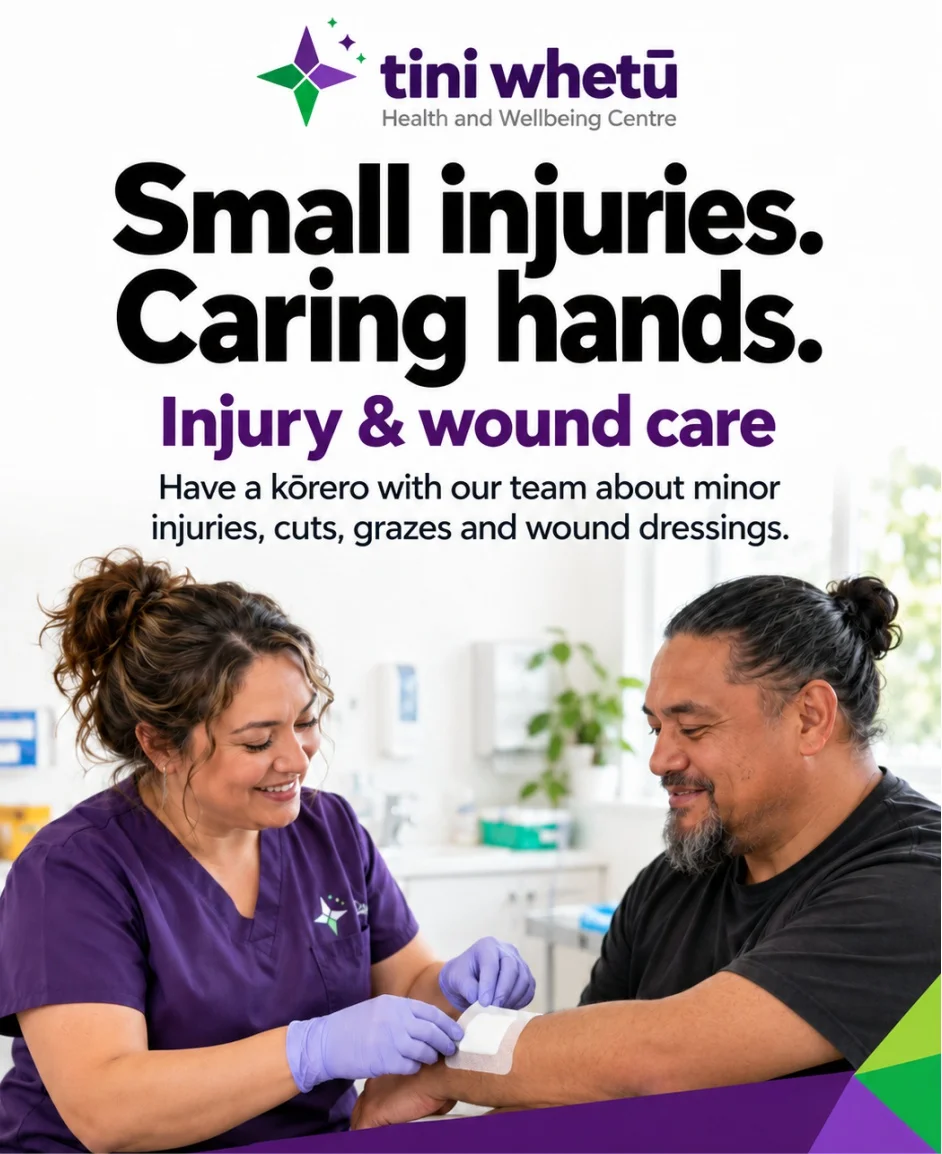
Small injuries deserve thoughtful care. Talk to our friendly team about minor injuries, cuts, grazes and wound dressings. We can help you understand the next steps and arrange follow-up care where needed.
What it is
Small injuries. Caring hands.
Cuts, grazes and minor injuries can happen during everyday life—at home, at work or while enjoying time outdoors. Sometimes a little advice is enough; other injuries need assessment, a dressing or follow-up care.
Wound care involves checking the injury, cleaning and protecting the affected area, and monitoring how it heals. The care you need depends on the type of wound, how it happened and your overall health.
If you’re unsure whether an injury needs attention, contact our team. We can help you understand the next step.
Who it’s for
You’re welcome to ask about care for yourself or someone in your whānau, including:
- Minor cuts, grazes and skin tears.
- Wounds that may need a dressing or dressing change.
- Follow-up after an injury or treatment elsewhere.
- A wound that isn’t healing as expected.
Let your healthcare professional know if you have diabetes, reduced immunity or another condition that may affect healing. Also mention any medicines you take, including blood thinners. This helps them assess the care you need.
What to expect
Care that starts with listening.
Your healthcare professional will ask how and when the injury happened, check the wound and discuss suitable treatment.
Depending on the injury, care may include cleaning the area, applying a dressing and explaining how to look after it at home. Some wounds need additional treatment or referral to another service.
Your tetanus vaccination history may also be checked, as some injuries require additional protection.
Before you leave, ask when your dressing should be changed, whether you need a follow-up appointment and what changes to watch for.
When to get further help
Seek prompt medical advice if a wound becomes increasingly painful, hot or swollen, develops spreading redness or leaks pus. Fever or feeling unwell can also be signs that it needs assessment.
How to book
Talk to our team.
Contact Tini Whetū to ask about injury assessment, wound care or a dressing appointment. Tell us when the injury happened and whether there is ongoing bleeding, worsening pain or another concern, so we can advise on the appropriate next step.
For a new injury, contact us promptly rather than waiting for a routine appointment.
For severe bleeding that won’t stop, or a serious injury, call 111. Deep or gaping wounds, bites and wounds containing embedded objects need prompt medical assessment.
Costs and availability
Contact our team to confirm appointment availability and any consultation or dressing charges.
The care required will depend on your injury. If further treatment, repeat dressings or referral is recommended, ask about the likely costs and follow-up arrangements.